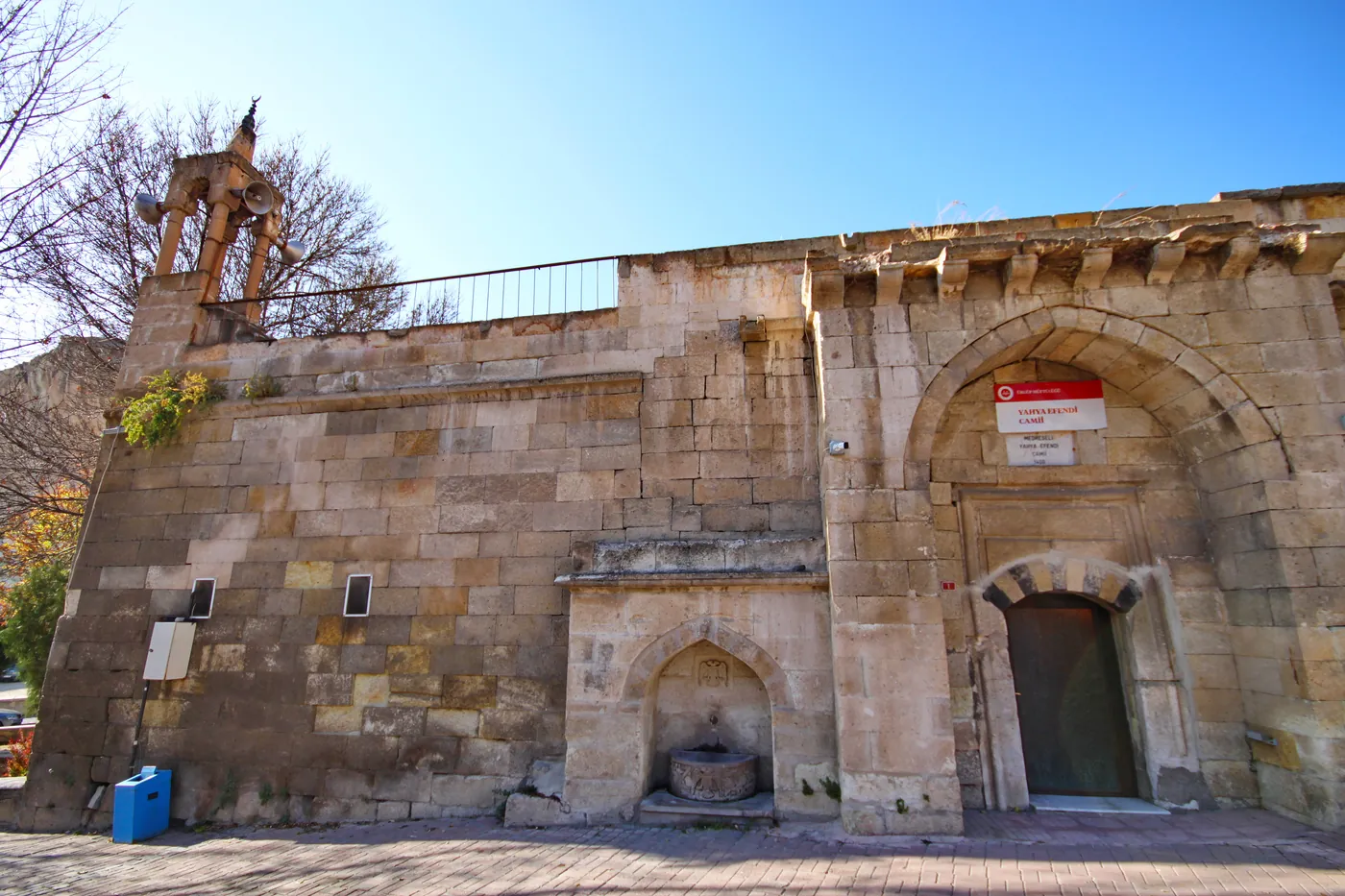
Medreseli Yahya Efendi Camii
Halk arasında "Hapishane Camii" olarak bilinen bu yapı, cami ve medresenin bitişik nizamda tasarlandığı özgün bir mimariye sahiptir. İnşa tarihi 15. yüzyılın başlarına, yaklaşık olarak 1400 yılına dayanmaktadır. Defterdar Seyyid Yahya Efendi tarafından yaptırılmıştır. Düzgün kesme taştan inşa edilen külliye, 1940 yılında yapılan düzenlemeyle cezaevine dönüştürülmüş ve 29 yıl boyunca hükümlüleri ağırlamıştır. 1970 yılındaki restorasyonla tekrar ibadete açılmıştır. Doğu cephesindeki, yanında zarif bir çeşme bulunan ana kapıdan, revaklı avlusuyla dikkat çeken medrese bölümüne girilir. Medreseden geçilen cami (harim) kısmı ise sivri tonozlu iki sahna ayrılmıştır ve batı tarafındaki kubbesiyle dikkat çeker.
Medreseli Yahya Efendi Mosque
Known among locals as the 'Prison Mosque,' this building has an original architecture in which mosque and madrasa adjoin one another. Its construction dates to the early 15th century, around 1400, commissioned by the treasurer (defterdar) Seyyid Yahya Efendi. Built of finely cut stone, the complex was converted into a prison in 1940 and housed convicts for 29 years, before being reopened for worship after a 1970 restoration. Through the main gate on the eastern façade — beside which stands an elegant fountain — one enters the madrasa section, notable for its arcaded courtyard. The mosque (harim) section, reached through the madrasa, is divided into two pointed-vaulted bays and is notable for the dome on its western side.